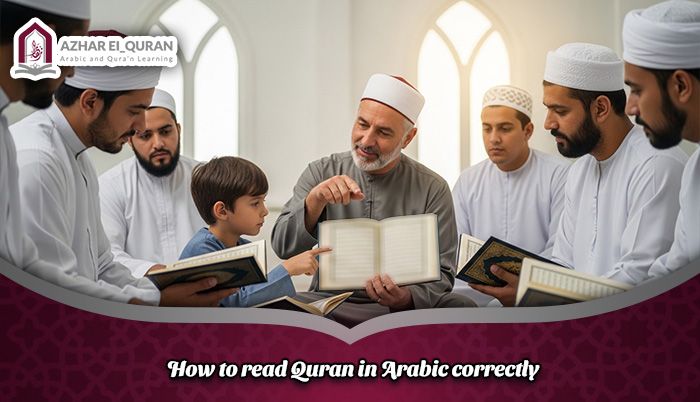
Learn how to read Quran in Arabic correctly with proper Tajweed rules, pronunciation, and step-by-step guidance. Improve your recitation skills, master Makharij, and build confidence in reading the Quran fluently with practical tips for beginners and advanced learners.
To read the Quran in Arabic correctly, start by learning the Arabic alphabet (Noorani Qaida) to master letter shapes and sounds, then study Tajweed rules, the art of precise articulation. Practice slowly with a qualified teacher to avoid cementing errors, focusing on vowel markings (Harakat) and consistent daily repetition of short Surahs.
Reading the Quran in Arabic correctly requires proper pronunciation, understanding of rules, and consistent practice. To read the Quran in Arabic correctly, you must master the fundamental rules of Tajweed (the science of proper pronunciation) and build a solid foundation in the Arabic script.
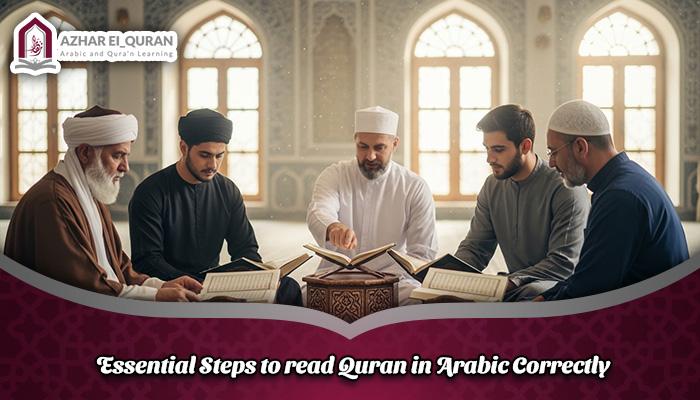
Essential Steps to read Quran in Arabic Correctly
Master the Arabic Alphabet: Begin by learning the 28 letters, focusing on their unique shapes and "Makharij" (articulation points).
Learn Vowel Diacritics (Harakat): Understand how the short vowels (Fatha, Kasra, Damma) and symbols like Sukun (rest) and Shadda (doubling) change the sound of letters.
Study Tajweed Rules: These rules are mandatory for preserving the meaning of the text. Key concepts include:
Ghunnah: Nasalization of certain letters like Noon and Meem.
Madd: Elongation of vowel sounds.
Heavy vs. Light Letters: Distinguishing between similar sounds, such as the light Seen (س) and the heavy Saad (ص).
Listen and Mimic: Regularly listen to renowned reciters (e.g., Sheikh Al-Husary or Mishary Rashid Alafasy) and repeat after them to internalize the correct rhythm and tone.
Find a Qualified Teacher: Self-study has limits; a certified tutor can identify and correct subtle mistakes in your pronunciation that you might not notice yourself.
Key Tips to read Quran in Arabic Correctly
Start Small: Begin by learning to read small Surahs, such as Al-Fatiha or the last ten Surahs (Juz Amma).
Consistent Practice: 10-15 minutes of daily, consistent practice is more effective than long, infrequent sessions.
Learn Basic Vocabulary: While not necessary for initial reading, understanding the meaning of common words can improve, and in some cases, speed up the learning process.
Master Special Signs: Pay attention to marks indicating pauses (Waqf) or specific pronunciation rules like Noon Sakinah or Tanween.
Common Pitfalls to Avoid
Rushing: Reading too fast leads to skipped letters and incorrect vowel lengths.
Ignoring Stops: Not pausing at the proper punctuation marks can alter the intended meaning of a verse.
Neglecting Consistency: Short daily practice (15–30 minutes) is far more effective than long, irregular sessions.

Learn how to read Quran in Arabic correctly
Reading the Quran in Arabic correctly requires proper pronunciation, understanding of rules, and consistent practice.
Here is a simple step-by-step guide to help you improve your recitation:
Learn the Arabic Alphabet Properly
Start with mastering the Arabic letters and their correct pronunciation points (Makharij). Each letter has a specific sound that must be pronounced from its correct articulation point.
For example:
- ق (Qaf) is deeper than ك (Kaf)
- ص (Saad) is heavier than س (Seen)
Learning the alphabet from a qualified teacher is highly recommended.
Understand and Apply Tajweed Rules
To read correctly, you must learn the rules of Tajweed, which means beautifying and perfecting Quran recitation.
Important Tajweed rules include:
- Makharij (articulation points)
- Sifaat (characteristics of letters)
- Noon Sakinah & Tanween rules
- Meem Sakinah rules
- Qalqalah
- Madd (elongation rules)
Applying Tajweed prevents mistakes that may change the meaning of words.
Practice with Short Surahs First
Begin with short chapters from Quran, such as:
- Surah Al-Fatihah
- Surah Al-Ikhlas
- Surah Al-Falaq
- Surah An-Nas
Repeat them daily until your pronunciation becomes smooth and confident.
Listen to Skilled Reciters
Listening improves your fluency and rhythm. You can follow famous Qaris like:
- Abdul Basit Abd-us-samad
- Mishary Rashid Alafasy
- Mahmoud Khalil Al-Husary
- Try to imitate their pronunciation carefully.
Read Slowly and Clearly
Do not rush. Allah says in the Quran to recite it with measured recitation (Tarteel). Focus on:
- Clear pronunciation
- Proper elongation
- Stopping at the correct places (Waqf rules)
Learn from a Qualified Teacher
Self-learning helps, but correction from a teacher is essential. A teacher can:
- Correct hidden mistakes
- Improve your fluency
- Guide your Tajweed application
Online classes are also available if local teachers are not accessible.
Practice Daily
Consistency is key. Even 15–20 minutes daily can greatly improve your reading.
Azhar El-Quran Academy offers an online Tajweed course designed to help learners master proper Quranic recitation across various skill levels. The program focuses on accurate pronunciation, vowel marks (tashkeel), and the rules of articulation (makharij) as per classical Islamic tradition. Taught in English, it enables students to read the Quran confidently and independently, even after completing basic Qaida studies.
The course is ideal for beginners and intermediate learners seeking structured, expert-led instruction with flexibility in scheduling. It is part of a broader curriculum in Arabic, Quran, and Islamic studies.
in conclusion
Reading the Quran correctly is a spiritual journey. With patience, sincere intention (Niyyah), and regular practice, you will gradually improve your Arabic pronunciation and Tajweed. Start small, stay consistent, and ask Allah for ease and guidance.